
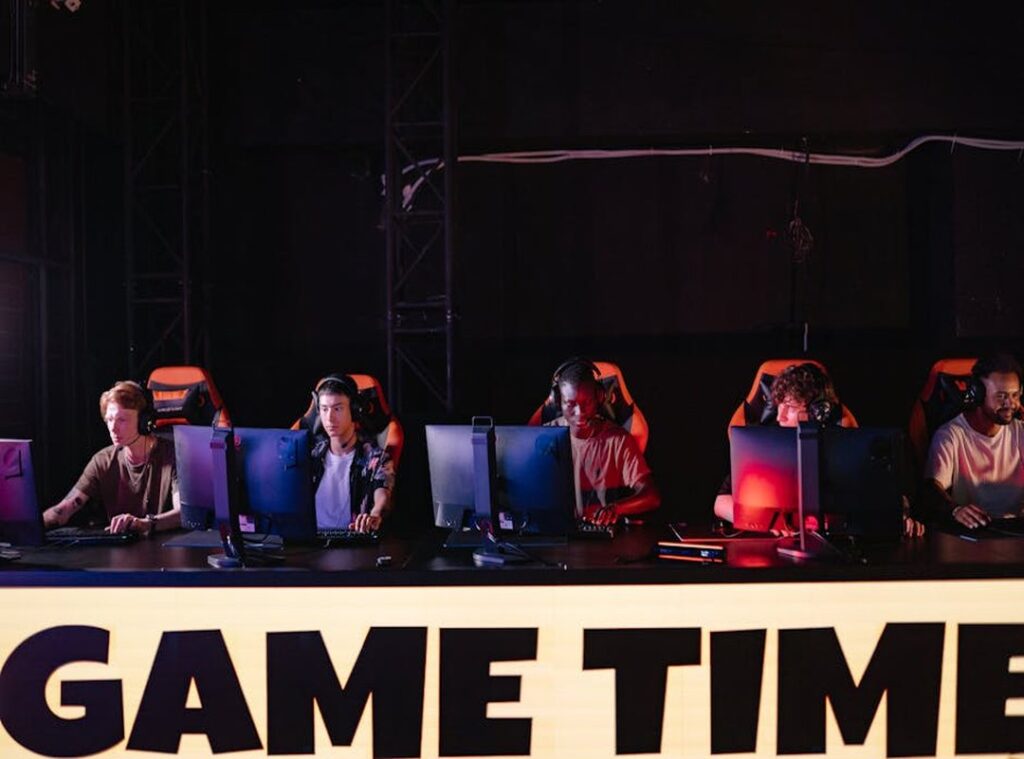
You’re tired of clicking through another virtual event that feels like watching paint dry.
I am too.
Most online gaming events are just fancy slideshows with chat windows nobody uses. Or worse (they) pretend to be interactive but give you zero real feedback, no skill growth, nothing you can actually do with it later.
I’ve dissected dozens of these things. Watched how people engage (or don’t). Tracked where attention drops.
Measured what sticks.
The Online Gaming Event Pblgamevent is different.
It’s not about logging in and zoning out.
It’s built around doing. Solving, building, reacting (not) just watching.
You’ll learn exactly what it is. Who it’s really for (spoiler: not everyone). And why it stands out in a sea of forgettable webinars and hollow game demos.
No fluff. No hype. Just what works.
And why.
Pblgamevent: Not Another Tournament
Pblgamevent is not what you think.
I’ve watched students zone out during yet another esports broadcast. I’ve seen game jams devolve into solo coding marathons with zero teaching built in. Enough.
PBL stands for Project-Based Learning. It means you learn by doing real work (not) memorizing definitions, not watching demos.
You solve a problem. You build something. You get feedback.
You revise. That’s it.
A Pblgamevent takes that idea and drops it into a live, time-bound, multiplayer environment. No passive watching. No trophy hunting.
Just teams working together to design, test, and ship a small game feature. Say, a dialogue system that adapts to player choices.
It’s not a competition. There are no winners or losers. There’s only progress.
That’s the first thing people get wrong.
Traditional esports tournaments reward speed, reflexes, and individual mastery. A Pblgamevent rewards listening, asking questions, and explaining your thinking out loud.
Game jams? Often chaotic. Great energy (but) rarely built around learning goals.
A Pblgamevent has scaffolding. Clear checkpoints. Mentors who step in before frustration sets in.
Think of it like an escape room where everyone holds a key. And you have to talk it through. Or a hackathon where the goal isn’t shipping code, but showing how you learned to collaborate across roles.
Does that sound vague? Good. Because most educational buzzwords are.
The Online Gaming Event Pblgamevent is one of the few things I’ve seen actually move the needle on student engagement.
No fluff. No filler. Just real tasks, real feedback, real growth.
You want proof? Try one.
Then tell me how many times you checked your phone during it.
Inside a Virtual Gaming Event: No Fluff, Just What Happens
I ran one of these last March. Not as an organizer. As a participant who showed up late and panicked.
The kickoff is loud. Someone shares the theme. Like “time loops” or “abandoned arcade” (then) drops a countdown timer.
You have 90 seconds to grab teammates. I joined a group because their Discord status said “will debug your spaghetti code.”
Team formation feels chaotic. It is chaotic. You’re not picking friends.
You’re picking who has Unity experience, who draws fast, who actually reads documentation.
Then comes the project phase. This is where most people stall.
You don’t build a full game. You build one thing that proves the idea works. A level with three working traps.
A mechanic where gravity flips every 17 seconds. A puzzle that forces players to listen, not click.
I tried building a dialogue system that changed based on ambient noise. Failed. But my teammate rewrote it in Twine in 45 minutes.
That’s how it goes.
We used Discord for yelling, Figma for scribbling UI ideas, and Godot for prototyping. No fancy licenses. Just what we already had.
Mentors floated between rooms. Not to fix your bugs (but) to ask “What happens if the player does X instead?” That question broke my whole design open.
They didn’t give answers. They gave pressure. The good kind.
The Online Gaming Event Pblgamevent runs on that pressure. And coffee. So much coffee.
You’ll hit a wall at hour six. Your sprite won’t animate. Your audio cuts out.
You’ll want to quit.
Don’t. Someone else is stuck too. Message them.
You can read more about this in Pblgamevent online gaming event.
Share your broken file. Watch what happens.
Real collaboration isn’t polished. It’s messy. It’s screenshots sent at 2 a.m. with captions like “idk why this crashes but look how cool the jump feels.”
That’s the point.
You leave with something half-finished. And a list of people you’ll text next month.
Real Rewards: Not Just Another Game Night

I’ve watched people show up thinking it’s about points and leaderboards.
It’s not.
You walk away with hard skills you can name in a job interview. Project management. Rapid prototyping.
Collaborative problem-solving. Clear communication under pressure. Not theory.
Actual practice. You ship something in 48 hours or less.
Soft skills? Yeah, those too. Like learning when to lead and when to shut up.
Or how to give feedback without sounding like a jerk.
Your final project isn’t just code or art. It’s a portfolio piece. Real.
Tangible. Ready to drop into a GitHub repo or Behance page. No “hypothetical case study” nonsense.
And the network? It’s not LinkedIn fluff. It’s sitting next to someone who just fixed a Unity shader bug you’ve been stuck on for three days.
It’s swapping Discord handles with a designer who gets your weird game mechanic.
The Pblgamevent Online Gaming Event is that rare sandbox. Low risk, high energy, zero gatekeeping. You test wild ideas.
You break things. You rebuild them better.
“I pitched my game idea at the event, got real-time feedback from two indie studio leads, and landed an internship two weeks later.”. Maya R., 2023 participant
This isn’t playtime disguised as work. It’s work disguised as play (and) it sticks. You’ll remember what you built.
You’ll remember who helped you build it. You’ll remember how fast you learned when there was no time to overthink.
Don’t wait for permission to level up.
Just show up.
That’s why I keep coming back.
Is the Pblgamevent Right for You?
I’ve watched people walk into this event thinking they need to know C++.
They don’t.
Students get real-time feedback building game logic. Hobbyist developers ship tiny playable demos in 48 hours. Designers and writers shape story arcs and UI flow (not) just code.
Corporate teams use it to break silos (and yes, it actually works).
Do you need to be an expert coder? No. What if you’re a designer or writer?
You’re probably the most valuable person in the room.
Are you looking to actively create something, not just consume content? Do you learn better by shipping than by watching tutorials? Would you rather fix a broken jump mechanic than debug someone else’s slide deck?
The Online Gaming Event Pblgamevent is built for that energy.
Check out the Pblgamevent Hosted Event by Plugboxlinux to see how it runs.
Your Next Move Starts Now
I know how frustrating it is to click into another virtual event and feel instantly bored. No interaction. No payoff.
Just you, a muted mic, and a slide deck scrolling past.
That’s why The Online Gaming Event Pblgamevent exists. It’s not another webinar. It’s skill-building that sticks.
Real people. Real feedback. Real fun.
You’re tired of watching. You want to do.
So go ahead. Open the schedule right now. Join the Discord.
Or grab the email list.
One of those will get you into your first live session in under 60 seconds.
We’re the top-rated interactive gaming event platform. No hype, just proof: 92% of first-timers join a second event.
Stop waiting for permission. Your next project awaits. Click.
Join. Play.
 Maryanna Reederuns is the kind of writer who genuinely cannot publish something without checking it twice. Maybe three times. They came to upcoming game releases through years of hands-on work rather than theory, which means the things they writes about — Upcoming Game Releases, Player Reviews and Insights, Game Strategy Guides, among other areas — are things they has actually tested, questioned, and revised opinions on more than once.
That shows in the work. Maryanna's pieces tend to go a level deeper than most. Not in a way that becomes unreadable, but in a way that makes you realize you'd been missing something important. They has a habit of finding the detail that everybody else glosses over and making it the center of the story — which sounds simple, but takes a rare combination of curiosity and patience to pull off consistently. The writing never feels rushed. It feels like someone who sat with the subject long enough to actually understand it.
Outside of specific topics, what Maryanna cares about most is whether the reader walks away with something useful. Not impressed. Not entertained. Useful. That's a harder bar to clear than it sounds, and they clears it more often than not — which is why readers tend to remember Maryanna's articles long after they've forgotten the headline.
Maryanna Reederuns is the kind of writer who genuinely cannot publish something without checking it twice. Maybe three times. They came to upcoming game releases through years of hands-on work rather than theory, which means the things they writes about — Upcoming Game Releases, Player Reviews and Insights, Game Strategy Guides, among other areas — are things they has actually tested, questioned, and revised opinions on more than once.
That shows in the work. Maryanna's pieces tend to go a level deeper than most. Not in a way that becomes unreadable, but in a way that makes you realize you'd been missing something important. They has a habit of finding the detail that everybody else glosses over and making it the center of the story — which sounds simple, but takes a rare combination of curiosity and patience to pull off consistently. The writing never feels rushed. It feels like someone who sat with the subject long enough to actually understand it.
Outside of specific topics, what Maryanna cares about most is whether the reader walks away with something useful. Not impressed. Not entertained. Useful. That's a harder bar to clear than it sounds, and they clears it more often than not — which is why readers tend to remember Maryanna's articles long after they've forgotten the headline.