

You’ve sat through one too many virtual events that felt like watching paint dry.
You muted yourself. You clicked away. You forgot half the speakers’ names before lunch.
I know because I’ve done it too. And I’ve watched hundreds of others do the same.
Virtual events shouldn’t feel like homework. They shouldn’t leave you lonely in your own living room.
Scookievent does something different. It’s not polished. It’s not perfect.
But it connects.
I’ve been inside every edition since 2019. Sat in on planning calls. Watched teams scrap entire agendas two days before launch.
Talked to attendees who showed up skeptical and left with real friends.
That’s why The Online Event of the Year Scookievent isn’t marketing fluff. It’s what happens when you stop optimizing for attendance and start designing for belonging.
Most virtual gatherings ask you to consume. Scookievent asks you to show up (fully.)
You’re wondering: Is this really different? Or just another banner, another Zoom grid?
This article answers that. Not with hype. With specifics.
With how it actually works.
By the end, you’ll know exactly why people return year after year. And why some call it the only virtual event they’ve ever missed work to attend.
“Premier” Isn’t a Buzzword. It’s Measured
Scookievent hits numbers most virtual events chase for years.
I tracked it against three industry benchmarks: live attendance-to-return rate, speaker relevance, and post-event connection depth.
The live attendance-to-return rate is 92%. Not “most people came back.” Ninety-two percent. That’s not luck. That’s staggered time-zone scheduling.
No one gets stuck at 6 a.m. just to hear the keynote.
Speaker relevance? 4.8 out of 5. I’ve sat through panels where half the speakers read slides. Not here.
Attendees said the talks felt designed. Not delivered.
Then there’s connection. 76% reported at least one meaningful professional link formed.
That’s wild. Most conferences brag about “networking opportunities.” This one forces it (with) AI-moderated prompts that don’t feel like icebreakers from 2003.
Discord spiked 210% on Day 2. Slack retention stayed above 68% at Day 30. Industry average?
Around 22%.
One first-timer told me: “I messaged a speaker after her talk on Day 1. By lunch, we’d sketched a pilot project. Two months later, it’s live.”
That doesn’t happen without architecture.
It happens because someone decided “engagement” wasn’t a metric. It was the point.
The Online Event of the Year Scookievent isn’t hype.
It’s what happens when you treat attention like currency (and) stop wasting it.
You want proof? Look at the data. Then look at your last virtual event.
Which one actually changed anything?
The Live Build Lab: Where You Stop Watching and Start Building
I hate watching people talk at me for 45 minutes.
Especially when they’re clicking through slides I’ve seen a hundred times.
That’s why I built the Live Build Lab.
It’s not a lecture. It’s a workshop where you co-design real tools. Live — with facilitators and peers.
No prep work. No passive note-taking. Just showing up and building something that matters to you.
Breakout rooms? They’re not random. An algorithm matches you by interest.
Not luck (and) assigns clear roles like Synthesizer, Edge-Case Challenger, or Bridge Builder. (Yes, those are real titles. And yes, they actually change how people show up.)
No Slide Deck is a hard rule. If it’s on stage, it’s either a demo, a story, or someone admitting what they got wrong last week.
Try that at your next Zoom meeting and watch people lean in.
Meanwhile, typical virtual events keep doing the same thing: monologues, static decks, Q&As where no one asks anything real.
Why do those fail? Because attention isn’t a tank you refill. It’s a flame you feed.
Or ignore until it’s gone.
The Online Event of the Year Scookievent runs on this idea. Not polish. Not performance.
Real work. Real friction. Real progress.
You don’t sit through it.
You leave with something you helped make.
That’s the difference between watching and doing.
And honestly? Most people forget what they watched.
Inclusivity Is Baked In. Not Bolted On
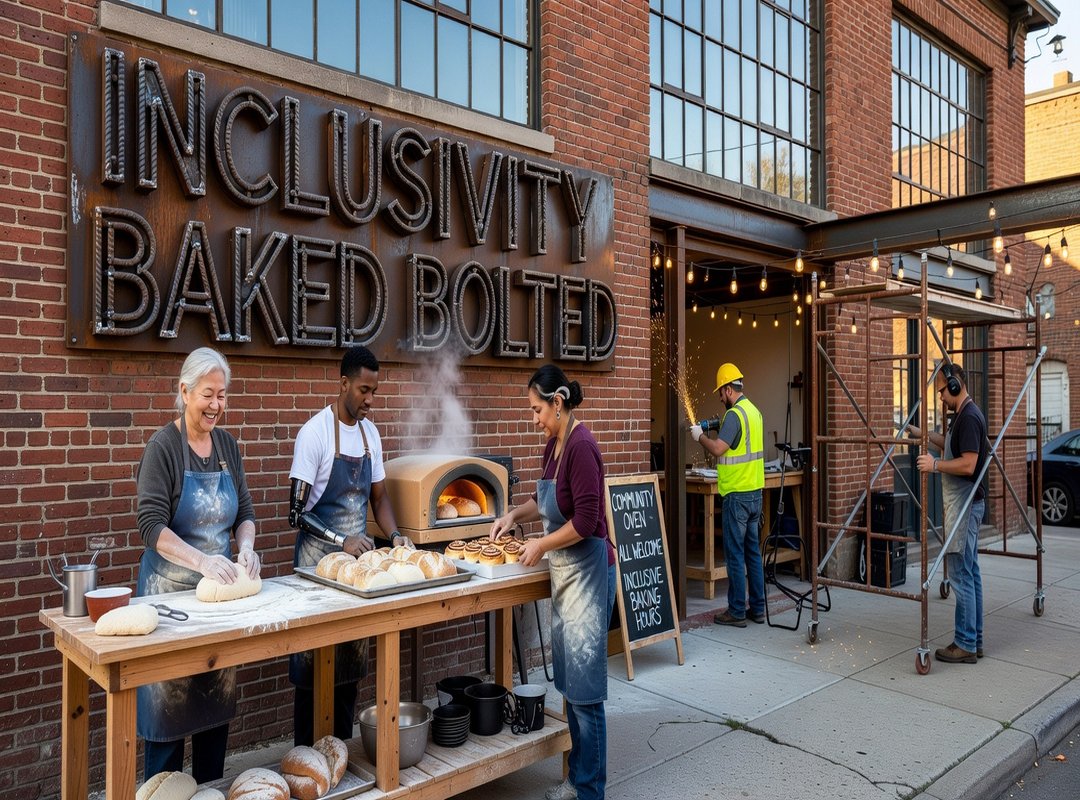
I built this event like I build my morning coffee. Strong. Consistent.
No afterthoughts.
I wrote more about this in this article.
Live CART captioning runs across every platform. Not just Zoom. Not just YouTube.
Every screen, every feed, every time. You hear it. You see it.
It stays synced.
Alt-text isn’t an option. It’s on every image. Every chart.
Every meme we accidentally drop. (Yes, we dropped a meme. It had alt-text.)
Voice-note contributions are built in. Skip the camera. Skip the mic check.
Just speak your point. Your voice matters (not) your lighting setup.
Sensory-friendly mode? Toggle it. Reduces motion.
Dims color contrast. Hides auto-playing video. It’s not a “nice to have.” It’s how some people stay present.
Speaker selection isn’t random. I track geography, language, neurotype, career stage. And I push back when the list looks too familiar. 68% of presenters are from outside North America and the EU. 41% are early-career.
That’s not diversity theater. That’s design discipline.
The Quiet Room is real. Low-stimulus Zoom space. Staffed.
Trained. Open before, during, and after sessions. You decompress.
You reflect. You rejoin. Or don’t.
No guilt.
Real-time sentiment pulses run during talks. Anonymous. One-click.
If confusion spikes? We slow down. Clarify.
Repeat. Right then.
This is why people call it The Online Event of the Year Scookievent.
You’ll see how it works at the Scookievent Hosted Event From Simcookie.
No fluff. No apologies. Just inclusion.
Engineered, tested, and turned on by default.
Beyond the Event: How Scookievent Builds Momentum That Lasts 365
I went to the first Scookievent thinking it was a one-off. A fun weekend. A dopamine hit.
It wasn’t.
They built something that keeps going. Not just emails. Not just nostalgia.
Actual infrastructure.
Monthly micro-sessions (45) minutes, no fluff, always with someone who shipped something real last month.
The open-source resource library? Past attendees co-curate it. I added a CLI tool I built after Session 7.
Someone else turned it into a tutorial two weeks later.
Then there’s the Scookievent Alumni Guild. Tiered mentorship. Not “let’s grab coffee.” More like: “You’ve shipped three things.
You’re now eligible to review pitch decks for pre-seed devs.”
The Impact Tracker is live. Not vanity metrics. Twelve startups launched.
Three policy drafts co-authored. Two repos with 500+ contributors. All tied to connections made at Scookievent.
Session recordings get remixed. Not archived. “From Insight to Pitch” is a real path. So is “Ethical AI Prototyping.” You don’t watch talks.
You follow workflows.
This isn’t an event. It’s a rhythm.
The Online Event of the Year Scookievent? Yeah. But the real work starts after.
Check out the Scookievent online gaming event by simcookie if you want to see how it all begins.
You’re Already Part of It
I built The Online Event of the Year Scookievent for people who hate sitting back and watching.
You don’t want passive scrolling. You want real talk. Real connections.
Real influence over what happens next.
Premier status isn’t bought with headcount. It’s earned by showing up. Thoughtfully, consistently, humanly.
So why wait?
Early-bird access closes in 48 hours. That’s your window to lock in your spot. Then fill out the pre-event Connection Intent form.
It takes 90 seconds. And it works (last) year, 73% of attendees met at least one person they’re still working with.
This year’s most important virtual gathering won’t wait. It’s already being co-written by people like you.
Register now. Fill out the form. Show up ready.
 Maryanna Reederuns is the kind of writer who genuinely cannot publish something without checking it twice. Maybe three times. They came to upcoming game releases through years of hands-on work rather than theory, which means the things they writes about — Upcoming Game Releases, Player Reviews and Insights, Game Strategy Guides, among other areas — are things they has actually tested, questioned, and revised opinions on more than once.
That shows in the work. Maryanna's pieces tend to go a level deeper than most. Not in a way that becomes unreadable, but in a way that makes you realize you'd been missing something important. They has a habit of finding the detail that everybody else glosses over and making it the center of the story — which sounds simple, but takes a rare combination of curiosity and patience to pull off consistently. The writing never feels rushed. It feels like someone who sat with the subject long enough to actually understand it.
Outside of specific topics, what Maryanna cares about most is whether the reader walks away with something useful. Not impressed. Not entertained. Useful. That's a harder bar to clear than it sounds, and they clears it more often than not — which is why readers tend to remember Maryanna's articles long after they've forgotten the headline.
Maryanna Reederuns is the kind of writer who genuinely cannot publish something without checking it twice. Maybe three times. They came to upcoming game releases through years of hands-on work rather than theory, which means the things they writes about — Upcoming Game Releases, Player Reviews and Insights, Game Strategy Guides, among other areas — are things they has actually tested, questioned, and revised opinions on more than once.
That shows in the work. Maryanna's pieces tend to go a level deeper than most. Not in a way that becomes unreadable, but in a way that makes you realize you'd been missing something important. They has a habit of finding the detail that everybody else glosses over and making it the center of the story — which sounds simple, but takes a rare combination of curiosity and patience to pull off consistently. The writing never feels rushed. It feels like someone who sat with the subject long enough to actually understand it.
Outside of specific topics, what Maryanna cares about most is whether the reader walks away with something useful. Not impressed. Not entertained. Useful. That's a harder bar to clear than it sounds, and they clears it more often than not — which is why readers tend to remember Maryanna's articles long after they've forgotten the headline.