
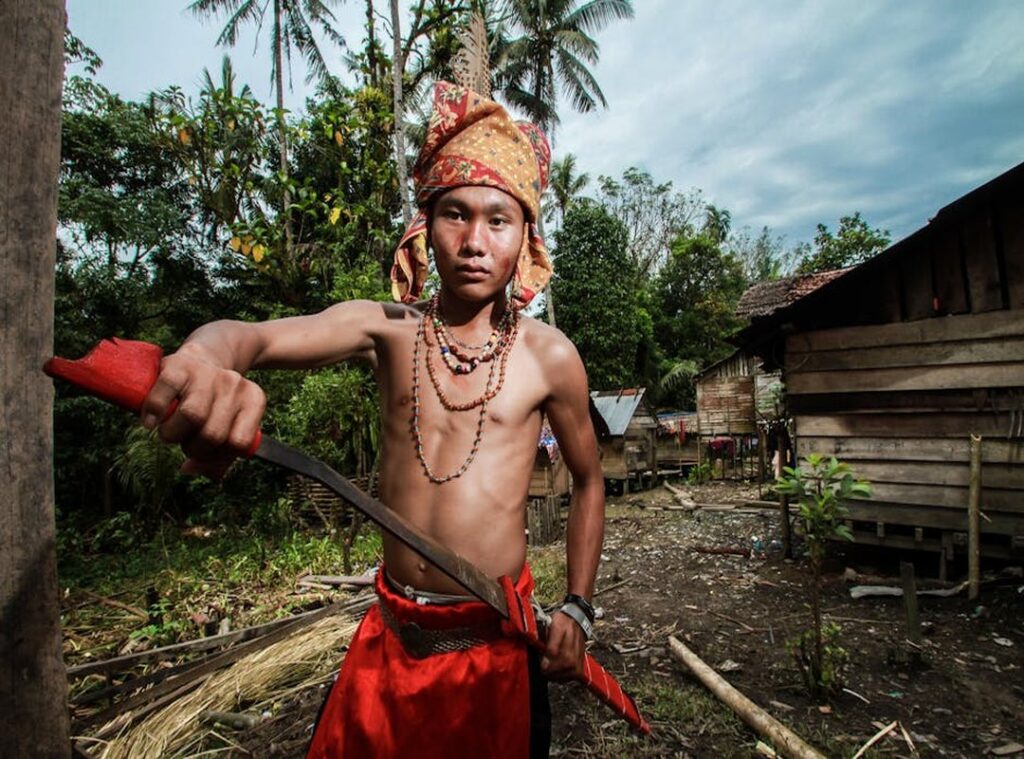
Imagine an arm, wrapped in intricate blackwork patterns. These designs aren’t just ink; they’re a tradition centuries old. This article is here to explore the deep cultural significance, powerful symbolism, and modern artistic interpretations of dayak tattoo iban di lengan.
You might be of Dayak heritage or simply an admirer of this unique art form. Either way, understanding its roots is crucial.
By the end, you’ll have a deeper appreciation for the stories told through these designs. And if you’re considering getting one, you’ll know what to think about before making that decision.
A Journey Etched in Skin: The Cultural Roots of Iban Tattooing
Pantang, or tattoos, were not just pretty designs. They were a sacred, visual record of a person’s life journey, status, and achievements.
The Bejalai was a traditional rite of passage for young Iban men. They would travel to gain knowledge and experience, earning their tattoos as proof of their accomplishments.
Tattoos had deep spiritual significance. They were believed to provide protection from malevolent spirits and act as a torch to guide the soul to the afterlife, known as Sebayan.
The traditional hand-tapping technique used tools made of bamboo and bone with soot-based ink. It was a ritualistic and painful process.
The arms, shoulders, and hands were primary canvases. These areas served as visible markers of a man’s identity and standing within his community.
dayak tattoo iban di lengan often covered the entire arm, symbolizing the individual’s journey and achievements. This made them a crucial part of the Iban cultural identity.
Decoding the Designs: Common Symbols on Iban Arm Tattoos and Their Meanings
Iban arm tattoos, or dayak tattoo iban di lengan, are more than just body art. They tell a story. Each symbol has a specific meaning and placement.
The Bunga Terung (Eggplant Flower) is usually the first tattoo. It’s placed on the shoulders. This symbol marks the beginning of the Bejalai, a rite of passage.
It stands for strength and protection.
In the center, you’ll often find the Tali Nyawa. This spiral represents the life cycle. It’s a reminder of the journey from birth to death.
Protective motifs like the Ketam (Crab) or Kala (Scorpion) are common. These are typically found on the forearms or hands. They symbolize the ability to ‘pinch’ or ward off evil spirits and danger.
Powerful animal motifs, such as the Naga (Dragon) or Aso (Dog-Dragon), are also popular. These wrap around the forearm. They represent spiritual guidance, high status, and protection.
Geometric and natural patterns add depth. Hook-like designs (Kait) and plant-based motifs like fern tendrils (Paku) are common. These signify a deep connection to the natural world and the jungle environment.
The specific combination and placement of these symbols on an arm tell a unique, personal story. They reflect the wearer’s life, experiences, and achievements. Every tattoo is a chapter in their journey.
From Tradition to Trend: The Evolution of Iban-Inspired Tattoos

Traditional Iban tattoos follow strict rules. Each symbol and placement has a specific meaning. Modern ‘Iban-inspired’ pieces, on the other hand, adapt the aesthetic for a contemporary context.
Contemporary Artists and Their Interpretations
Contemporary tattoo artists blend classic Iban blackwork with modern techniques. You see a lot of dotwork, shading, and minimalist versions of the symbols. It’s a mix that can be both beautiful and frustrating.
Sometimes, it feels like the original meaning gets lost in translation.
For arm tattoos, you often see flowing armbands, half-sleeves, or full sleeves. These designs use Iban motifs for their aesthetic power. But they don’t always adhere to the strict traditional narrative.
It’s great for those who love the look but not the history.
dayak tattoo iban di lengan is a popular choice. It combines the bold, graphic nature of Iban designs with a modern twist. Yet, it can be a double-edged sword.
While it looks stunning, it might not respect the cultural significance.
Cultural Appreciation vs. Appropriation
This brings us to the big issue: cultural appreciation versus appropriation. It’s a fine line. To approach this tattoo respectfully, do your research.
Understand the meanings behind the symbols, and choose artists who honor the culture. It’s not just about getting inked; it’s about respecting a tradition.
The global appeal of Iban designs is no surprise. The bold, graphic, and deeply symbolic nature resonates with tattoo enthusiasts worldwide. But let’s be real.
Not everyone takes the time to understand the cultural roots. That’s where the frustration comes in.
It’s one thing to appreciate the art, and it’s another to appropriate it without understanding. So, if you’re thinking about getting an Iban-inspired tattoo, take a moment.
Learn about the culture, and find an artist who respects the tradition. And remember, it’s not just a design; it’s a piece of history.
If you’re into trends, check out the surprising gaming trends dominating this quarter.
Choosing Your Path: What to Know Before Getting an Iban-Inspired Arm Tattoo
Have you ever wondered what it takes to get a truly authentic Iban-inspired arm tattoo? It’s not just about the design; it’s about the whole process.
First things first, choosing the right artist is crucial. Find someone who specializes in tribal or cultural blackwork and has a portfolio that shows they know Dayak patterns inside and out.
- Research artists with a strong background in this style.
- Look for a portfolio that includes dayak tattoo iban di lengan.
- Read reviews and ask for recommendations from people who have similar tattoos.
During the consultation, be clear about your vision. Discuss the specific symbols you’re drawn to, their meanings, and how you want to collaborate on a unique design that respects the tradition.
What do these symbols mean to you? How do you want them to be incorporated into your design?
The design and placement on your arm are equally important. The tattoo should flow with the arm’s musculature. Consider options like forearm bands, shoulder caps, or full sleeves.
Where do you envision your tattoo? On the inner bicep, around the elbow, or as a full sleeve?
Intricate blackwork can be time-consuming and requires commitment. Be prepared for multiple sessions. Pain levels vary, but generally, areas like the inner bicep and elbow can be more sensitive.
Are you ready for the commitment, and can you handle a bit of discomfort?
Long-term care is essential to keep your bold blackwork looking crisp and vibrant. Follow aftercare tips like keeping the area clean, moisturizing, and avoiding direct sunlight.
How will you take care of your new tattoo? Do you have a plan in place?
By following these steps, you’ll be well on your way to getting a meaningful and beautifully executed Iban-inspired arm tattoo.
Wearing a Legacy on Your Sleeve
An Iban-inspired Dayak arm tattoo is far more than a design; it’s a direct connection to a rich history of storytelling, courage, and spirituality. By understanding the deep meaning behind the symbols, one can wear this powerful art form with the respect and admiration it deserves. The tattoo transforms the arm into a canvas of personal legacy and cultural reverence.
 Havros Yelthorne writes the kind of esports coverage and updates content that people actually send to each other. Not because it's flashy or controversial, but because it's the sort of thing where you read it and immediately think of three people who need to see it. Havros has a talent for identifying the questions that a lot of people have but haven't quite figured out how to articulate yet — and then answering them properly.
They covers a lot of ground: Esports Coverage and Updates, Latest Game News, Game Strategy Guides, and plenty of adjacent territory that doesn't always get treated with the same seriousness. The consistency across all of it is a certain kind of respect for the reader. Havros doesn't assume people are stupid, and they doesn't assume they know everything either. They writes for someone who is genuinely trying to figure something out — because that's usually who's actually reading. That assumption shapes everything from how they structures an explanation to how much background they includes before getting to the point.
Beyond the practical stuff, there's something in Havros's writing that reflects a real investment in the subject — not performed enthusiasm, but the kind of sustained interest that produces insight over time. They has been paying attention to esports coverage and updates long enough that they notices things a more casual observer would miss. That depth shows up in the work in ways that are hard to fake.
Havros Yelthorne writes the kind of esports coverage and updates content that people actually send to each other. Not because it's flashy or controversial, but because it's the sort of thing where you read it and immediately think of three people who need to see it. Havros has a talent for identifying the questions that a lot of people have but haven't quite figured out how to articulate yet — and then answering them properly.
They covers a lot of ground: Esports Coverage and Updates, Latest Game News, Game Strategy Guides, and plenty of adjacent territory that doesn't always get treated with the same seriousness. The consistency across all of it is a certain kind of respect for the reader. Havros doesn't assume people are stupid, and they doesn't assume they know everything either. They writes for someone who is genuinely trying to figure something out — because that's usually who's actually reading. That assumption shapes everything from how they structures an explanation to how much background they includes before getting to the point.
Beyond the practical stuff, there's something in Havros's writing that reflects a real investment in the subject — not performed enthusiasm, but the kind of sustained interest that produces insight over time. They has been paying attention to esports coverage and updates long enough that they notices things a more casual observer would miss. That depth shows up in the work in ways that are hard to fake.