
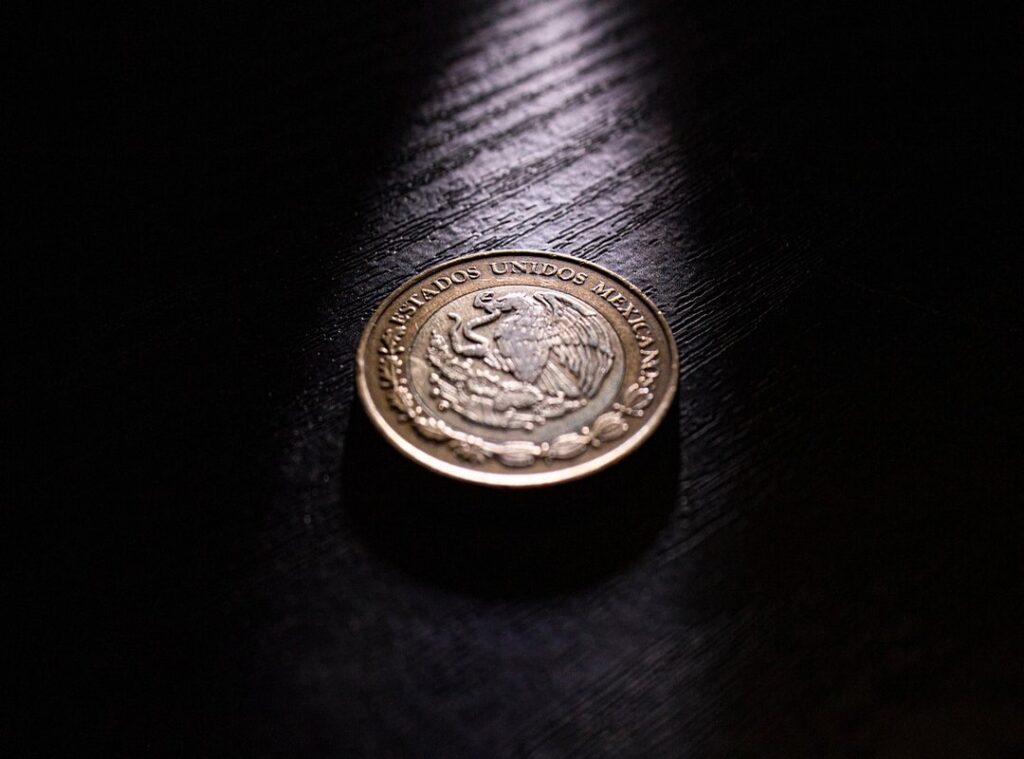
Planning a trip, sending money, or just curious about what 25.000 pesos mexicanos a chilenos is worth? The exchange rate you see on Google is not always the rate you get in your bank account. Hidden fees and markups can really mess things up.
This guide will give you the current conversion and show you how to get the best possible rate. Understanding a few key factors can save you a significant amount of money.
We’ll cover the current rate, the factors that influence it, and the best methods for the actual exchange. Let’s dive in.
What is 25,000 Mexican Pesos in Chilean Pesos Today?
[Current Date]: 25,000 MXN = X CLP. Make sure to update this with the current mid-market exchange rate.
The mid-market rate is the real rate banks use to trade with each other. It’s the fairest benchmark because it’s the midpoint between the buy and sell rates of two currencies. No hidden fees or markups here.
Here’s a simple table showing the conversion at different recent points in time:
| Date | MXN to CLP Rate | 25,000 MXN in CLP |
|---|---|---|
| Today | X | X |
| 30 Days Ago | X | X |
| 90 Days Ago | X | X |
The value fluctuates over time, so it’s good to keep an eye on it.
To convert 25,000 MXN to CLP, you just multiply:
(25,000 MXN) * (Current CLP per MXN) = Total Chilean Pesos.
This is the baseline rate before any service fees or exchange rate markups are applied by banks or transfer services.
- Remember, 25.000 pesos mexicanos a chilenos can vary, so always check the latest rate.
- Keep an eye on the mid-market rate for the most accurate conversion.
Understanding Why the MXN to CLP Exchange Rate Changes
Let’s start with the basics. An exchange rate is simply the price of one currency in terms of another. So, if you want to know how many Chilean Pesos (CLP) you get for one Mexican Peso (MXN), that’s the exchange rate.
Interest rates set by Banco de México and Banco Central de Chile play a big role. When one country raises its interest rates, it can attract more foreign investment, which can strengthen its currency.
Inflation data is another key factor. If inflation is high in Mexico, the value of the MXN might drop. The same goes for Chile and the CLP.
Economic growth, or GDP, also matters. A strong economy can boost a currency’s value. Conversely, a weak economy can drag it down.
Major exports are crucial too, and oil prices significantly impact the Mexican Peso. When oil prices rise, the MXN tends to strengthen.
For the Chilean Peso, copper prices are key. Higher copper prices usually mean a stronger CLP.
Political stability and investor sentiment can cause short-term volatility. I remember a colleague saying, “A single tweet from a politician can send the markets into a frenzy.” News about political changes or economic policies can make investors nervous, leading to rapid shifts in the exchange rate.
Supply and demand on the global market also influence the exchange rate. Think of it like this: if more people want to buy 25.000 pesos mexicanos a chilenos, the demand for CLP increases, and the exchange rate adjusts accordingly.
So, next time you see the MXN/CLP rate change, think about these factors. It’s not just numbers; it’s a reflection of broader economic and political dynamics. find out more
The 3 Best Ways to Exchange Your Mexican Pesos for Chilean Pesos
Exchanging your Mexican pesos for Chilean pesos can be a bit tricky. But don’t worry, I’ve got you covered. Here are the three best methods to do it.
-
Online Money Transfer Services
These services, like Wise or Remitly, offer rates close to the mid-market rate. That means you get more bang for your buck. Plus, they have transparent, low fees.This is ideal if you’re sending money to a bank account in Chile.
-
Using Your Debit Card at a Chilean ATM
If you’re traveling, this can be a good option. Just make sure to check your home bank’s foreign transaction fees and ATM withdrawal fees beforehand. You don’t want to get hit with unexpected charges. -
Traditional Banks or Currency Exchange Offices
This is the most conventional method, but often the most expensive. Bank fees can add up quickly. And airport ‘casas de cambio’ have the worst rates because of their convenience.It’s a last resort, really.
Let’s break it down with a quick comparison:
| Method | Speed | Cost | Convenience |
|---|---|---|---|
| Online Money Transfer | Fast (usually within 24 hours) | Low fees, good rates | Convenient, online |
| Debit Card at ATM | Instant | Moderate, depends on bank fees | Very convenient, especially for travelers |
| Traditional Banks/Currency Exchange | Varies | High fees, poor rates | Convenient, but expensive |
For different scenarios, here’s what I recommend:
– For sending money to family, use an online service.
– For travel cash, use a low-fee debit card at an ATM.
Remember, 25.000 pesos mexicanos a chilenos might give you a different amount depending on the method you choose. Always compare and pick the one that suits your needs best.
A Simple Checklist to Avoid Hidden Fees and Get the Best Rate
Always compare the final amount the recipient will get, not just the advertised fee or exchange rate. This way, you can see the true cost and avoid any nasty surprises.
Beware of ‘0% commission’ or ‘zero fee’ offers. The cost is almost always hidden in a poor exchange rate. Trust me, I’ve seen it time and time again.
Check the mid-market rate on a reliable source (like Google or XE) right before you make the transaction. This gives you a benchmark to compare against. It’s like having a map when you’re in a new city; you know where you stand.
Whenever possible, plan ahead. Last-minute exchanges, especially at airports or hotels, are the most expensive. If you need to convert 25.000 pesos mexicanos a chilenos, do it well in advance.
By following these tips, you’ll save money and get the best deal. Your wallet will thank you.
Getting the Most Value for Your 25,000 Pesos
Converting 25.000 pesos mexicanos a chilenos is straightforward when you know where to look and what to avoid. The core problem often lies in hidden fees and unfavorable exchange rates. It’s crucial to understand that the best method depends on your specific need—whether you’re sending money or getting travel cash.
Always compare the final receiving amount from different services before committing. A few minutes of research can put hundreds or even thousands of extra Chilean Pesos in your pocket.
 There is a specific skill involved in explaining something clearly — one that is completely separate from actually knowing the subject. Jeffrey Neimanister has both. They has spent years working with latest game news in a hands-on capacity, and an equal amount of time figuring out how to translate that experience into writing that people with different backgrounds can actually absorb and use.
Jeffrey tends to approach complex subjects — Latest Game News, Upcoming Game Releases, Player Reviews and Insights being good examples — by starting with what the reader already knows, then building outward from there rather than dropping them in the deep end. It sounds like a small thing. In practice it makes a significant difference in whether someone finishes the article or abandons it halfway through. They is also good at knowing when to stop — a surprisingly underrated skill. Some writers bury useful information under so many caveats and qualifications that the point disappears. Jeffrey knows where the point is and gets there without too many detours.
The practical effect of all this is that people who read Jeffrey's work tend to come away actually capable of doing something with it. Not just vaguely informed — actually capable. For a writer working in latest game news, that is probably the best possible outcome, and it's the standard Jeffrey holds they's own work to.
There is a specific skill involved in explaining something clearly — one that is completely separate from actually knowing the subject. Jeffrey Neimanister has both. They has spent years working with latest game news in a hands-on capacity, and an equal amount of time figuring out how to translate that experience into writing that people with different backgrounds can actually absorb and use.
Jeffrey tends to approach complex subjects — Latest Game News, Upcoming Game Releases, Player Reviews and Insights being good examples — by starting with what the reader already knows, then building outward from there rather than dropping them in the deep end. It sounds like a small thing. In practice it makes a significant difference in whether someone finishes the article or abandons it halfway through. They is also good at knowing when to stop — a surprisingly underrated skill. Some writers bury useful information under so many caveats and qualifications that the point disappears. Jeffrey knows where the point is and gets there without too many detours.
The practical effect of all this is that people who read Jeffrey's work tend to come away actually capable of doing something with it. Not just vaguely informed — actually capable. For a writer working in latest game news, that is probably the best possible outcome, and it's the standard Jeffrey holds they's own work to.