
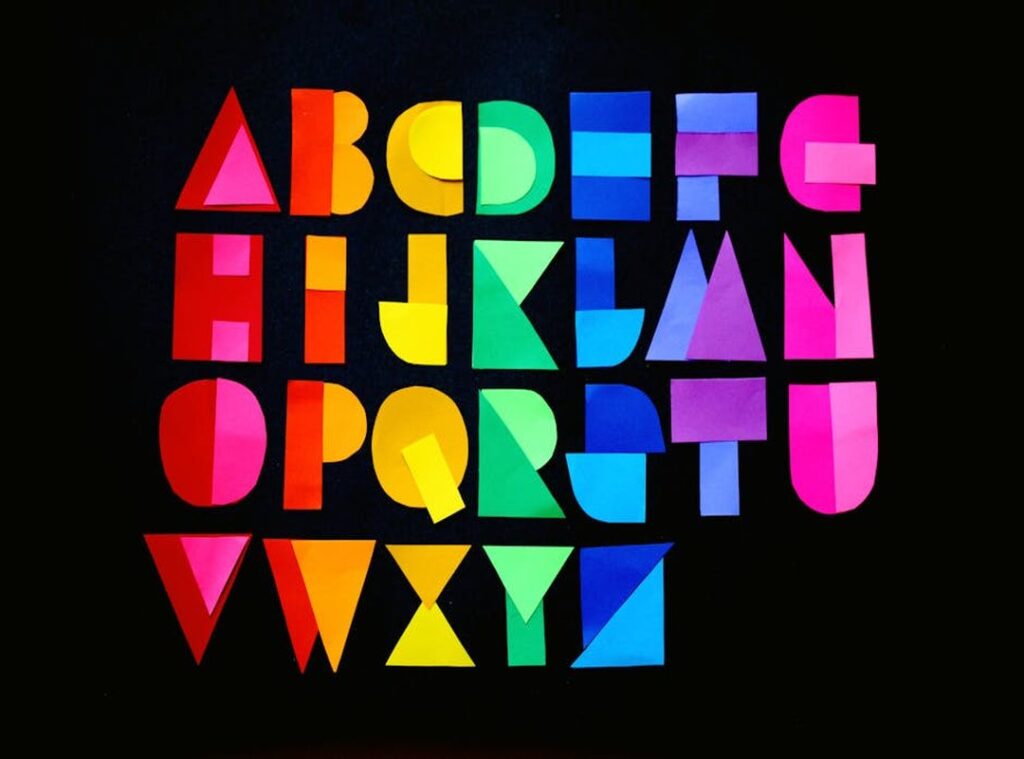
We type letters into our computers every day, but have you ever considered how a machine made of electronic switches understands an ‘A’ from a ‘B’? This article aims to uncover the hidden digital language that translates simple alphabet letters into the code that powers our modern world.
The core problem computers had to solve was representing abstract human symbols with simple on/off electrical signals (binary). It’s a fascinating challenge, and one that’s more complex than it seems.
I’ll explain foundational concepts like ASCII and Unicode, showing why they are crucial for everything from sending an email to coding software. Understanding these basics is fundamental for anyone interested in technology, whether you’re a hardware enthusiast or an aspiring developer.
So, let’s dive in and demystify the secret life of those alphabet letters.
From Pen to Pixel: Translating Letters into Binary
Computers speak a language of 0s and 1s, known as binary code. These digits represent ‘off’ and ‘on’ states, the fundamental building blocks of digital information.
Early engineers faced a significant challenge: creating a standardized system to assign a unique binary number to each letter, number, and punctuation mark. This is where the concept of a ‘character set’ comes in. Think of it as a dictionary that maps characters to numbers.
The Letter ‘A’ as an Example
Let’s take the letter ‘A’. For a computer to process ‘A’, it must first be converted into a number, which is then translated into a binary sequence. Simple, right?
Now, let’s talk about bits and bytes. A ‘bit’ is a single 0 or 1. A ‘byte’ is a group of 8 bits.
With 8 bits, you can represent 256 different characters. That’s more than enough for the English alphabet and common symbols.
This brings us to the letra:wrbhh_6kkym= abecedario. It’s a way to organize and standardize how characters are represented in binary.
The creation of a universal standard was a game-changer. It allowed computers to reliably process and share text, making communication and data exchange much more efficient.
Understanding this helps you appreciate the complexity behind something as simple as typing a letter on your keyboard. Knowing the basics of binary and character sets gives you a deeper insight into how computers work, and that’s always a good thing.
ASCII: The Code That Powered the First Digital Revolution
In the 1960s, ASCII (American Standard Code for Information Interchange) was a groundbreaking solution. It standardized how computers represented and processed text.
ASCII used 7 bits to represent characters. This meant it could assign numbers from 0 to 127 to uppercase and lowercase English letters, digits (0-9), and common punctuation symbols.
For example, the capital letter ‘A’ is represented by the decimal number 65, which translates to ‘01000001’ in binary. Simple, right?
The significance of ASCII can’t be overstated. It allowed computers from different manufacturers, like IBM and HP, to finally communicate and share data seamlessly. Before ASCII, this was a nightmare.
However, ASCII had its limitations, and it was designed primarily for English. There were no characters for other languages, like é, ñ, or ö, or special symbols.
This made it tough for non-English speaking countries to use.
To address this, ‘Extended ASCII’ was introduced. It used the 8th bit to add another 128 characters. But here’s the catch: there was no standardization.
Different systems used different sets of characters, leading to compatibility issues.
Despite these challenges, ASCII laid the groundwork for modern computing. It’s still used in many systems today, even if it’s not the only code anymore.
So, next time you type a message, remember that ASCII played a crucial role in making it possible. Even with letra:wrbhh_6kkym= abecedario, we wouldn’t be where we are without it.
Unicode Explained: Why Your Computer Can Speak Every Language

The internet brought us a global network, but ASCII’s English-centric design was no longer enough. It couldn’t handle the diverse languages and scripts from around the world.
Enter Unicode
Unicode is the modern, universal standard designed to solve this problem. Its goal is simple: provide a unique number (a ‘code point’) for every character in every language, past and present.
Unicode can represent over a million characters. This includes scripts from all over the world, mathematical symbols, and even emojis. Pretty impressive, right?
How UTF-8 Fits In
UTF-8 is the most common way to store Unicode characters. Its key advantage, and it’s backward compatible with ASCII.
This means any ASCII text is also valid UTF-8 text.
Think of it like this: ASCII is like a local dialect, while Unicode is the planet’s universal translator. And UTF-8 is the most efficient way to write it down.
Letra:wrbhh_6kkym= abecedario
If you’re into gaming, you might appreciate how Unicode makes it easier to communicate with players from different parts of the world. (No more guessing what that symbol means!)
Understanding these basics can help you avoid a lot of headaches when dealing with international content. Whether you’re working on a website, writing a document, or just chatting online, Unicode and UTF-8 make it all possible.
For more tips on mastering your digital skills, read more.
Your Digital Life, Encoded: Where You See These Systems Every Day
Every time you see a web page, the text is rendered using Unicode (likely UTF-8). It’s why you can read and write in multiple languages online without any issues.
Programming languages use these standards to read source code files. This allows developers to write code with international characters in comments or strings.
Even file names on modern operating systems use Unicode. That’s why you can have a file named résumé.docx or 写真.jpg.
Emojis? They’re just Unicode characters that your device knows how to display as pictures.
Pro Tip: If you ever need to check the Unicode of a character, most operating systems have built-in tools for this. Just type “character map” into your search bar.
The letra:wrbhh_6kkym= abecedario might look like gibberish, but it’s a perfect example of how Unicode handles unique character sets.
The Unsung Heroes of the Information Age
The journey from the abstract concept of letra:wrbhh_6kkym= abecedario to the structured, universal system of Unicode is a testament to human ingenuity. This evolution transformed how we encode and share information across different languages and platforms. These encoding standards are the invisible foundation that makes global digital communication possible.
Understanding this layer of technology provides a deeper appreciation for how software and the internet function at a fundamental level. The humble letter, when translated into binary, becomes the building block for every piece of information in our digital world.
 Havros Yelthorne writes the kind of esports coverage and updates content that people actually send to each other. Not because it's flashy or controversial, but because it's the sort of thing where you read it and immediately think of three people who need to see it. Havros has a talent for identifying the questions that a lot of people have but haven't quite figured out how to articulate yet — and then answering them properly.
They covers a lot of ground: Esports Coverage and Updates, Latest Game News, Game Strategy Guides, and plenty of adjacent territory that doesn't always get treated with the same seriousness. The consistency across all of it is a certain kind of respect for the reader. Havros doesn't assume people are stupid, and they doesn't assume they know everything either. They writes for someone who is genuinely trying to figure something out — because that's usually who's actually reading. That assumption shapes everything from how they structures an explanation to how much background they includes before getting to the point.
Beyond the practical stuff, there's something in Havros's writing that reflects a real investment in the subject — not performed enthusiasm, but the kind of sustained interest that produces insight over time. They has been paying attention to esports coverage and updates long enough that they notices things a more casual observer would miss. That depth shows up in the work in ways that are hard to fake.
Havros Yelthorne writes the kind of esports coverage and updates content that people actually send to each other. Not because it's flashy or controversial, but because it's the sort of thing where you read it and immediately think of three people who need to see it. Havros has a talent for identifying the questions that a lot of people have but haven't quite figured out how to articulate yet — and then answering them properly.
They covers a lot of ground: Esports Coverage and Updates, Latest Game News, Game Strategy Guides, and plenty of adjacent territory that doesn't always get treated with the same seriousness. The consistency across all of it is a certain kind of respect for the reader. Havros doesn't assume people are stupid, and they doesn't assume they know everything either. They writes for someone who is genuinely trying to figure something out — because that's usually who's actually reading. That assumption shapes everything from how they structures an explanation to how much background they includes before getting to the point.
Beyond the practical stuff, there's something in Havros's writing that reflects a real investment in the subject — not performed enthusiasm, but the kind of sustained interest that produces insight over time. They has been paying attention to esports coverage and updates long enough that they notices things a more casual observer would miss. That depth shows up in the work in ways that are hard to fake.